


17 Feb Rethinking Real Estate: The Urgency of Climate Risk Assessment
Rethinking Real Estate: The Urgency of Climate Risk Assessment
For years, real estate has been all about location, it’s property features and the economics of market demand. But as climate change continues to intensify, it’s time to rethink how we think and evaluate real estate. With extreme weather events such as floods, wildfires, hurricanes, earthquakes and rising sea levels becoming more commonplace —the old way of assessing real estate just doesn’t cut it anymore, and hence the necessary rethinking of real estate.
The Need for Climate Risk in Property Evaluation
“Forget about square feet and the number of bathrooms. Home buyers now will also be asking about the weather.
Many people move to areas endangered by extreme weather events because the lifestyle and cost of living outweigh the risks. But that is changing, with soaring insurance costs, two recent devastating hurricanes, and wildfires in the Los Angeles area underscoring the issue”
Climate change isn’t some distant worry—it’s already affecting home values and investments today. Billions of dollars are lost every year due to climate-related disasters, and yet, many properties are still being evaluated without considering these risks. This outdated approach leads to overpriced properties, skyrocketing insurance costs, and financial instability for homeowners and investors.
A house’s risk of flood or wildfire usually isn’t as readily apparent as an ugly décor or a very cluttered home. But now, Zillow is joining home listing websites like Redfin, Realtor.com, and CoStar Group Homes.com by adding scores provided by climate-risk modeling company First Street.
Zillow Group is one of the largest listing service companies, is rolling out climate-risk estimates that size up a home’s likelihood of damage from flood, fire, and wind over the next 30 years. These scores, along with soaring insurance costs, could change home buyers buying habits as they seek to avoid homes with high risk scores.
What Is Climate Risk Data and How to Use It When Shopping for a Home
Zillow has added climate risk data from First Street to give homebuyers important information about climate-related events when shopping for homes.

Climate Central | Land projected to be below annual flood level in 2050
Sea level rise and coastal flood risk maps — a global screening tool by Climate Central
Interactive global map showing areas threatened by sea level rise and coastal flooding.
Impact Map | Climate Impact Lab
The Climate Impact Map provides a highly localized picture of future climate impacts across the US and the globe. Explore how climate change will affect you.
Coastal Risk Screening Tool
Land projected to be below annual flood level in 2050
Explore sea level rise and coastal flood threats by adjusting the controls below.
For USA only
- Protecting Investments: Properties in high-risk areas may lose value due to climate impacts.
- Reducing Insurance Surprises: Climate risk affects insurance rates—knowing this upfront helps buyers plan better.
- Keeping Up with Regulations: Governments are tightening environmental laws, and properties that don’t comply could face issues down the road.
- Long-Term Stability: Understanding climate risks ensures smarter, more sustainable investment choices.
Categories of Climate Risk for Real Estate Evaluation
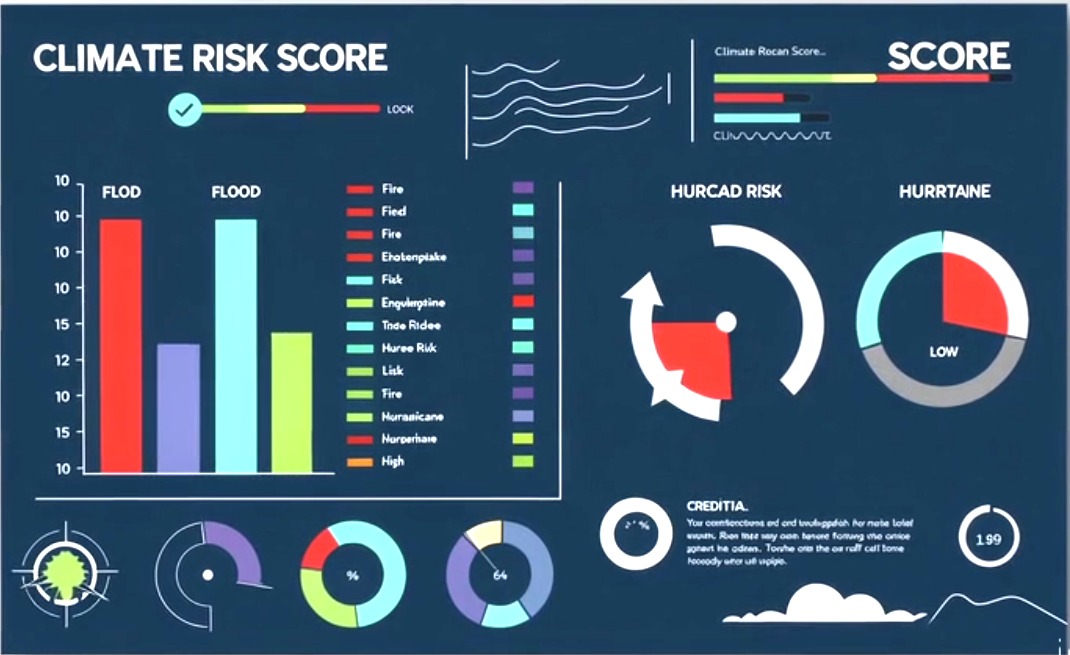
A climate risk score should factor in multiple environmental risks to give an accurate picture of a property’s long-term viability. Here’s what should be included:
- Flood Risk
Floods are one of the most destructive and expensive disasters in real estate. Properties in flood-prone areas are at higher risk of damage, maintenance issues, and rising insurance costs.
What to Look At:
- Distance from rivers, lakes, and oceans
- FEMA flood zone classification
- Historical flood data
- Drainage infrastructure
- Elevation and land absorption rates
- Hurricane and Storm Surge Risk
Coastal areas are particularly vulnerable to hurricanes, which bring devastating winds, heavy rain, and flooding.
What to Look At:
- Proximity to hurricane-prone zones
- Wind resistance of buildings
- Past storm surge impacts
- Local emergency preparedness
- Wildfire Risk
As global temperatures rise, wildfires are becoming more frequent and severe, particularly in dry, forested, and semi-arid areas.
What to Look At:
- Nearby fire-prone forests and grasslands
- Local drought conditions
- Fire-resistant building codes
- Emergency response services
- Heat and Temperature Extremes
Some areas are becoming too hot to handle, leading to higher energy costs and lower property desirability.
What to Look At:
- Temperature trends and heatwaves
- Urban heat island effect (UHI)
- Cooling and energy efficiency of buildings
- Health risks from extreme heat
- Drought and Water Scarcity Risk
Regions struggling with water shortages face serious long-term challenges, affecting both property value and livability.
What to Look At:
- Average rainfall and drought history
- Groundwater levels
- Water conservation policies
- Dependence on external water sources
- Sea Level Rise Vulnerability
Coastal properties are at high risk of chronic flooding, land erosion, and eventual property devaluation.
What to Look At:
- Distance from the ocean or tidal areas
- Sea level rise projections
- Existing flood barriers or seawalls
- Local government resilience planning
- Air Quality and Pollution Exposure
Poor air quality doesn’t just affect health—it can also drag down property values, especially in urban areas.
What to Look At:
- Local air pollution levels (PM2.5, ozone, industrial emissions)
- Proximity to factories, highways, or major traffic zones
- Availability of parks and green spaces
- Air filtration and ventilation in buildings
Making Climate Risk Scores a Standard in Real Estate
To truly integrate climate risk into real estate, we need to take action:
- Create a Standardized Climate Risk Model: Governments, insurers, and real estate groups should collaborate to define a universal climate risk scoring system.
- Include Climate Risk in Property Valuations: A climate score should be listed alongside property size, location, and amenities in all real estate reports.
- Make Climate Risk Disclosure Mandatory: Sellers should be required to disclose climate risks just like they disclose other property issues.
- Encourage Climate-Resilient Building Practices: Incentives should be offered for homes with sustainable, disaster-resistant construction.
- Make Climate Data Accessible to Buyers: Homebuyers and investors should have easy access to climate risk reports when researching properties.
Conclusion
Real estate can’t afford to ignore climate change anymore. By making climate risk assessment a core part of property evaluation, we can help homeowners, investors, and developers make smarter, more resilient decisions. A clear and standardized climate risk score will not only protect investments but also push the industry toward sustainable and climate-conscious development.
This isn’t just an option—it’s the future of real estate.
Sea level rise and coastal flood risk maps — a global screening tool by Climate Central
Interactive global map showing areas threatened by sea level rise and coastal flooding.
Impact Map | Climate Impact Lab
The Climate Impact Map provides a highly localized picture of future climate impacts across the US and the globe. Explore how climate change will affect you.
Climate change will cause a $1.47 trillion decline in U.S. home values by 2055, according to a new study from climate-research company First Street.
The 12th National Risk Assessment


